Volume II | The Body
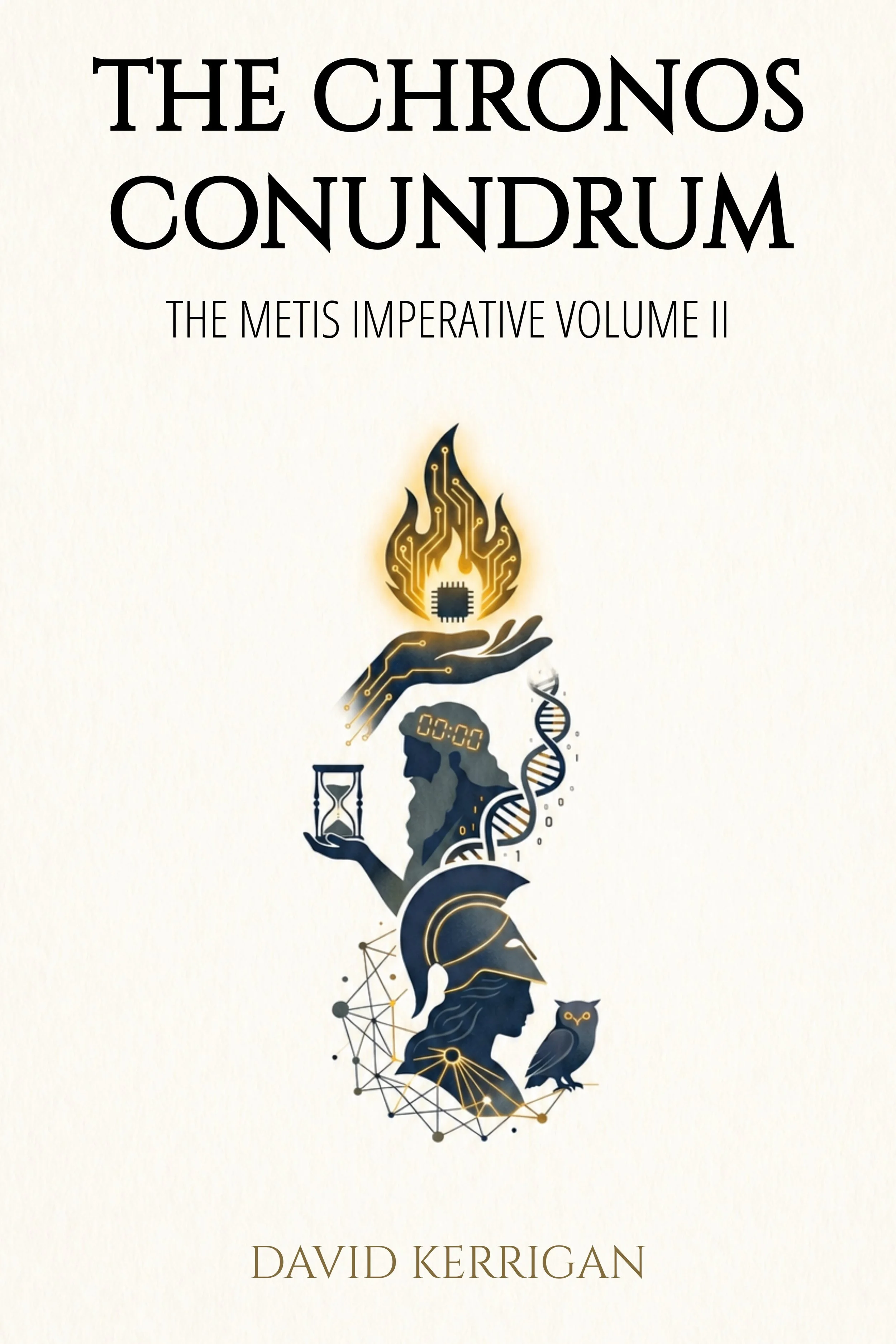
The Chronos Conundrum
Convergence, Longevity and the Governance of Time
What happens when ageing stops being fate and starts becoming engineering?
In The Chronos Conundrum, the future shifts from code to flesh. If Volume I explored the rise of artificial intelligence and the externalization of cognition, Volume II turns inward—toward medicine, longevity and the possibility of reshaping biological time itself.
The Argument
Forget the immortality hype
The Chronos Conundrum traces the convergence of disruptive technologies, and the credible longevity advances emerging from it, that would redefine what a human life is.
It starts from today’s weight-loss drug boom and follows the logic to its conclusion: the “Midas effect” of pricing human time, and the logistical and financial bottlenecks that will decide who actually gets to live longer.
This is not a book about simple life extension fantasies. It is a book about what follows when lifespan becomes a capability: when ageing can be measured, influenced and perhaps edited; when healthspan gains arrive unevenly; and when the institutions built around the old human timetable begin to fracture under the pressure of a new reality.
As breakthroughs in biotechnology, computation and medicine begin to converge, questions once confined to myth and science fiction become political, economic and moral problems. Who gets access first? What happens to careers, pensions, inheritance and power when healthy life expands? What happens when the conquest of time benefits some groups long before others?
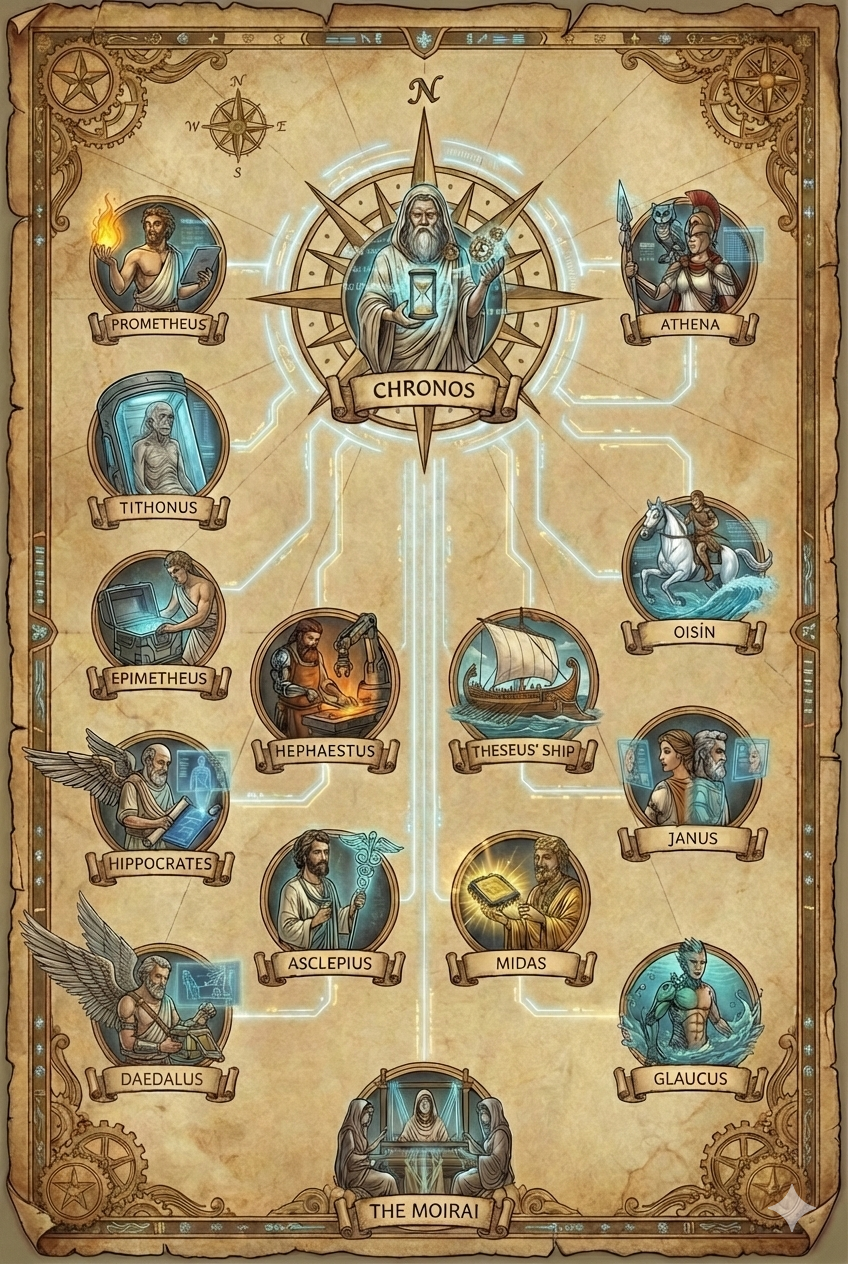
Drawing on the figure of Chronos, other mythical characters and the deeper wisdom of Metis, this volume argues that longevity is not merely a biomedical story. It is a civilizational test. Without foresight, rules and shared horizons, the extension of life could widen inequality, harden advantage and destabilize the human contract it claims to improve.
The Chronos Conundrum offers readers a framework for thinking clearly about one of the most consequential shifts of the century: not just whether we can live longer, but whether we are prepared for what longer life will do to society.
For readers interested in longevity, governance, technology and the future of human life, this book is a strategic exploration of a world where decline may no longer be destiny.
“The future is something we build, neglect, govern, squander or guide”