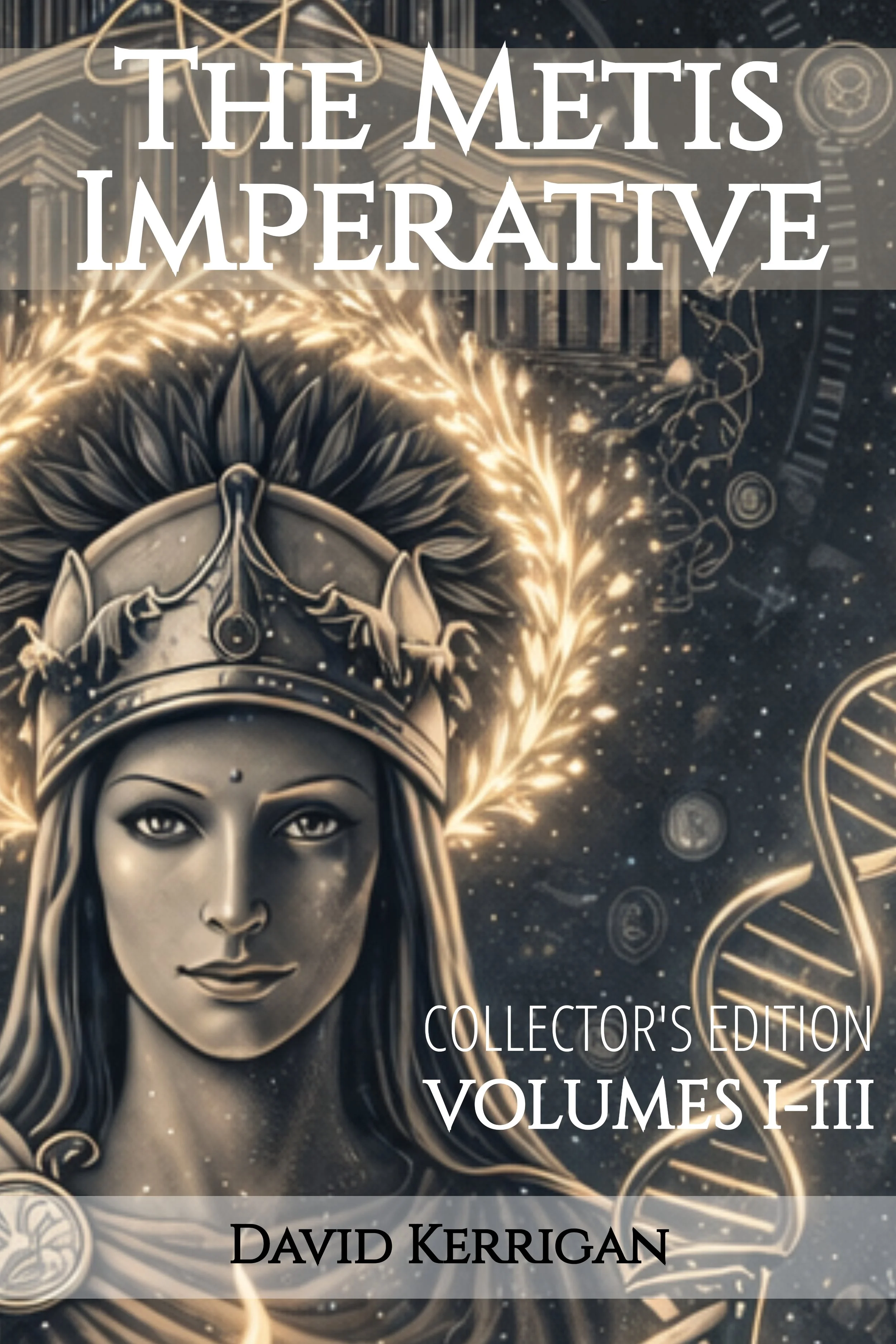
Welcome
The End of History and the Beginning of the Future
If you woke up a century ago, almost none of the technologies that structure modern life would be familiar as everyday realities. Flight existed, but most people had never flown. Television, computing, satellites, credit cards, antibiotics, transplants, nuclear power, lasers and modern genetics were either primitive, experimental or absent from ordinary life. The home, the hospital, the workplace, the battlefield and the marketplace have all been remade within a single human lifetime.
The lesson is not simply that technology changes. It is that we repeatedly underestimate how completely it can reorganise the world. The End of History fallacy is the belief that the future will be a smoother, safer, more familiar extension of the present than the evidence allows.
That mistake is now dangerous. Artificial intelligence, robotics and biotechnology are not merely new industries. AI alters cognition and decision-making. Robotics alters labour and physical execution. Biotechnology alters medicine, identity and the boundaries of human agency. Each would be historically significant on its own. Arriving together, they form a convergence that our inherited institutions are not prepared to govern.
This is the deeper problem. The institutions built to manage the industrial age are structurally misaligned with technologies that operate across cognition, biology, labour, sovereignty and time. The nation state is too small for borderless technologies and too slow for exponential ones. Markets can accelerate invention, but they cannot by themselves define the common good. Regulation can react, but it struggles to anticipate. Democracy can deliberate, but not always at the speed of deployment.
Yet we still ask the wrong questions. We point to the limitations of today’s AI rather than prepare for its obvious evolution. We treat commercial incentives as though they will naturally produce public wisdom. We debate the tools while ignoring the systems they are beginning to reshape.
In some ways, I wish The Metis Imperative were unnecessary. I wish the future could be left to unfold through ordinary politics, ordinary markets and ordinary institutional reform. But the honest truth is that it cannot. It will not be another hundred years before we wake up in an unrecognisable world. The convergence now underway is too powerful, too compressed and too consequential to be left to drift.
If we do drift, we will not wake into a neutral future. We will wake into a world chosen for us by speed, scale and incentive. We will wake into systems that were optimised before they were understood, deployed before they were governed, and normalised before they were chosen.
That is why The Metis Imperative exists. Metis is practical wisdom under conditions of uncertainty: the ability to govern powerful systems without pretending they are simple, controllable or benign. The future must be built intentionally, or it will be built for us.
The task now is not to predict the future, but to become wise enough to shape it.
Read/Download the Metis Manifesto (8 Pages)