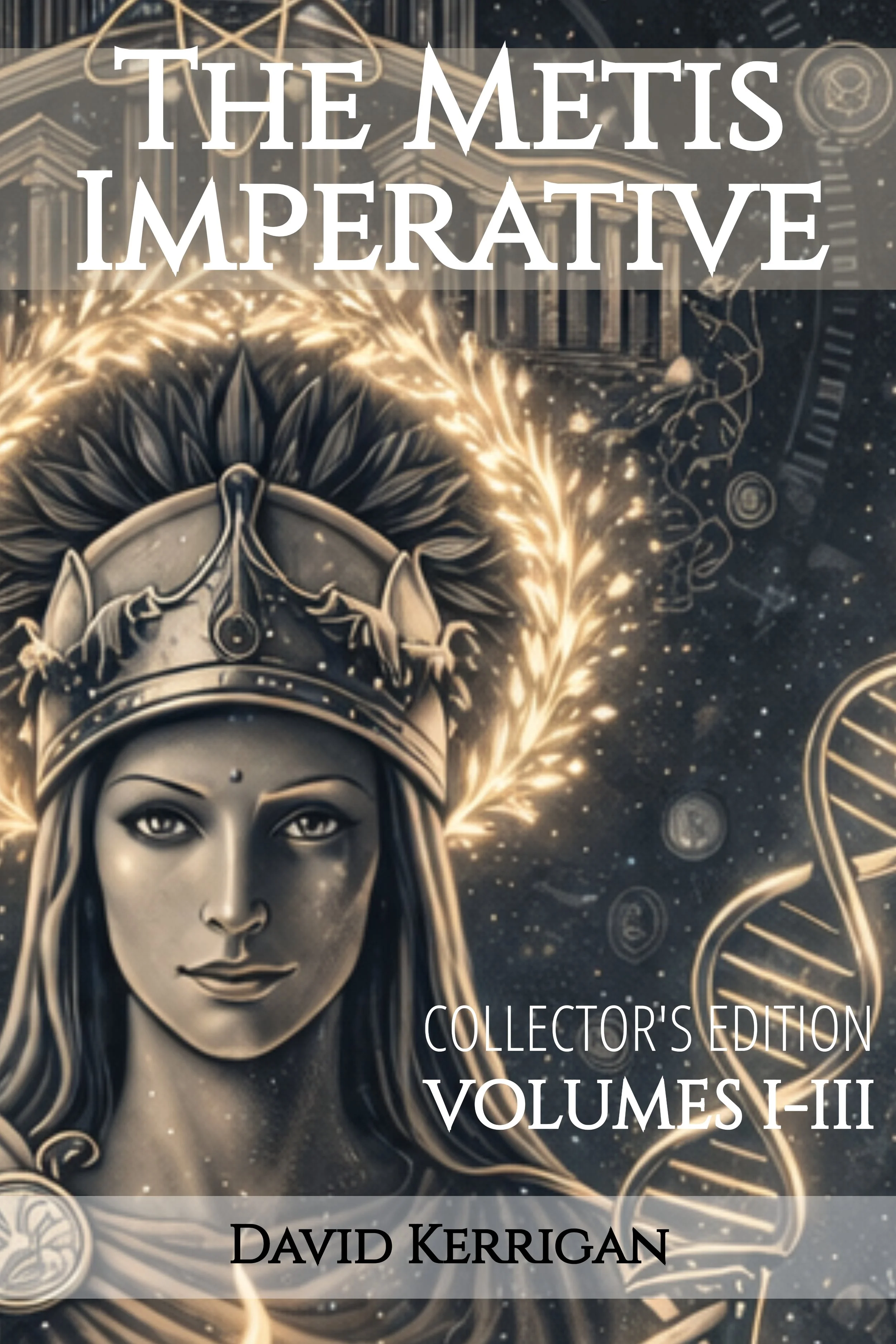
The Metis Manifesto:
Why We Need Wisdom
Download this document free (PDF)
Beware the Promethean Convergence
We began modern civilization with a theft.
In the old myth, Prometheus climbed the mountain, stole fire from the gods and handed it to humanity. That first fire gave us warmth, light, metal, agriculture, cities, industry and war. It gave us the capacity to transform the world around us. It made civilization possible.
But for all its power, that fire had a limit. It was dead. It waited for a hand to feed it. It waited for a will to direct it. It could burn a forest, forge a sword or heat a home, but it could not decide. It could not persuade. It could not learn. It could not act in our place.
For ten thousand years, this was the bargain of technology: we provided the intent; the tool provided the leverage. That bargain is ending. We have returned to the mountain and stolen a second fire. But this flame is different. This flame stares back.
We are building systems that do not merely execute commands. AI systems learn from experience, communicate in human language, generate strategies, imitate judgement and increasingly act as agents in the virtual and physical worlds.
At the same time, we are beginning to turn our engineering power inward, treating biology not as fate but as code, and ageing not as destiny but as a process to be measured, slowed, manipulated and perhaps one day reversed.
And beneath these ambitions, we are rediscovering an older truth: the digital future is not weightless. It rests on energy, minerals, logistics, institutions, trust and the fragile architecture of the physical world.
This is the Promethean Convergence.
It is the moment when our power to alter mind, body and world begins to exceed our wisdom to govern the consequences.
Artificial intelligence externalises cognition. Biotechnology and longevity science begin to rewrite the body. Energy systems, minerals, chips, logistics and politics determine whether our ambitions can survive contact with reality. These are often treated as separate revolutions. They are not. They are parts of one civilizational event.
And we’re not ready for it.
The central question of our age is therefore not whether technology will advance. It will. Nor is the question whether we should welcome or fear it. We will do both, because both responses are rational.
The question is whether we can become wise enough, quickly enough, to create a better world or a future we’ll regret.
The Failure of Our Inherited Instincts
The wall between mind and machine is weakening.
The wall between biology and engineering is weakening.
The wall between digital ambition and physical constraint is becoming impossible to ignore.
Taken separately, these are disruptive technologies. Taken together, they are no less than a new operating environment for humanity. So we can’t reasonably expect our current frameworks to suffice. But most of us do.
Our institutions were not built for this speed. Our politics was designed for territorial disputes, legislative cycles, partisan competition and visible crises. Our regulatory systems were designed for industries with boundaries, products with release dates and risks that could be inspected after the fact. Our markets were designed to reward speed, scale and advantage long before they were designed to reward restraint. Our minds were shaped for tribal signals, local threats, social status and narrative shortcuts.
None of this makes us stupid. It makes us human. But the Promethean age exploits every weakness in the old human operating system. We need a new wisdom to navigate the future.
We anthropomorphise machines that do not understand us. We trust fluent language as if it were wisdom. We confuse statistical plausibility with truth. We mistake confidence for competence. We build systems we cannot fully explain, then embed them inside institutions we already struggle to govern. We chase capability because delay feels like defeat. We call for control while rewarding those who race ahead of it.
At the same time, our biological ambitions are beginning to outrun our social imagination. If ageing becomes modifiable, who benefits first? If healthspan can be extended, who pays? If time itself becomes a product, does longevity become liberation — or the final luxury good? A world where some people buy decades while others wait for basic care is not a triumph of science. It is a fracture of the human bargain.
And all of this rests on a material base we have neglected for too long. Intelligence requires compute. Compute requires chips. Chips require fabs, water, energy, rare elements and minerals. Electrification requires copper, grids, storage and permitting. Robotics requires motors, sensors, batteries and supply chains. Longevity requires laboratories, clinics, manufacturing capacity, data infrastructure and healthcare systems able to absorb the consequences of success.
The high-tech future is not weightless. Every digital dream has a physical invoice.
Two Tempting Failures
When faced with a convergence this large, societies tend to reach for one of two failures.
The first is the failure of blind acceleration.
This is the Promethean reflex without Metis: steal the fire, scale the system, ship the product, capture the market, deal with the consequences later. It assumes that progress is self-correcting, that technology will solve the problems created by technology, and that the fastest actor deserves to set the terms for everyone else. It treats caution as cowardice and governance as drag. It accepts inequality as collateral damage.
But acceleration without wisdom is not courage. It is afterthought masquerading as destiny.
The second failure is the fantasy of simple prohibition.
This is the belief that the future can be made safe by forcing it back into old categories. Ban the tool. Freeze the science. Regulate the unknown until it resembles the known. Cut the future down until it fits the institutions we already have. Protect the incumbents. Lobby for moratoriums.
But retreat is not wisdom either. The same tools that frighten us may be necessary to navigate the crises ahead: climate adaptation, demographic ageing, disease, infrastructure decay, food security, cyber instability and the governance of complexity itself. A civilization that refuses new capability may not remain virtuous. It may simply fracture.
So the choice is not acceleration or retreat. The choice is whether we can build a third path.
The Path of Metis
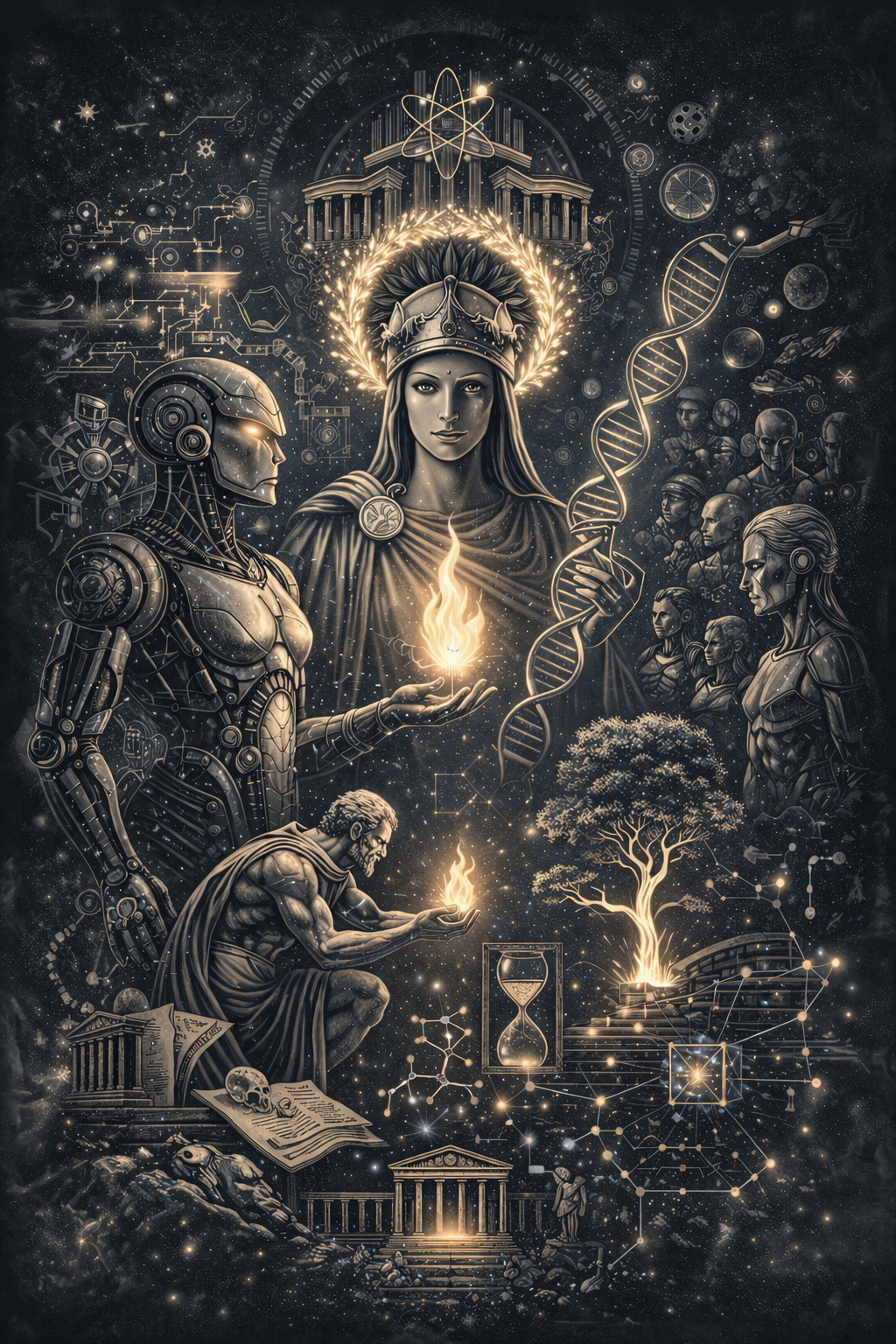
In the myths, Metis was not the god of brute force. She was not the spirit of speed, conquest or domination. She was cunning intelligence: adaptive, strategic, embodied wisdom. She represented the kind of intelligence that survives uncertainty not by pretending the world is simple, but by learning how to move through complexity.
The Metis Imperative is the demand that our wisdom become equal to our power.
It is the demand that technological capability be matched by institutional imagination, social resilience, moral seriousness and practical judgement. It is the demand that we stop behaving like tenants in a civilization we inherited and start behaving like architects of the one we must now build.
This does not mean worshipping innovation. It does not mean fearing every advance. It does not mean pretending that any one ideology, nation, company, regulator or expert community can solve what is now a species-level coordination problem.
Quite simply though, it does mean accepting that the old mental model has failed. We can no longer treat artificial intelligence as ordinary software. We can no longer treat biology as an untouchable given. We can no longer treat infrastructure as background scenery. We can no longer treat governance as a slow administrative layer that reacts after reality has already changed.
The Three Domains of the Metis Imperative
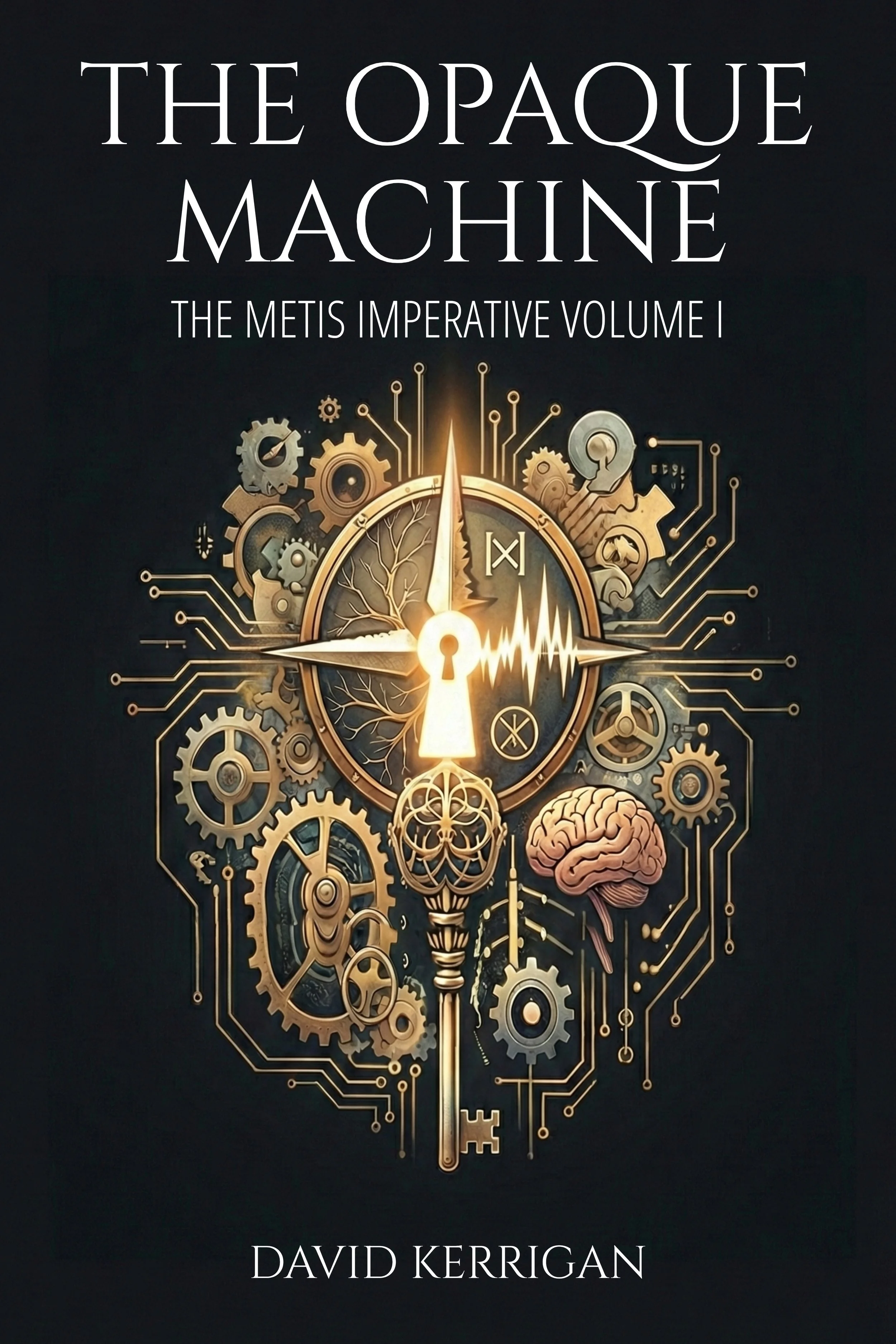
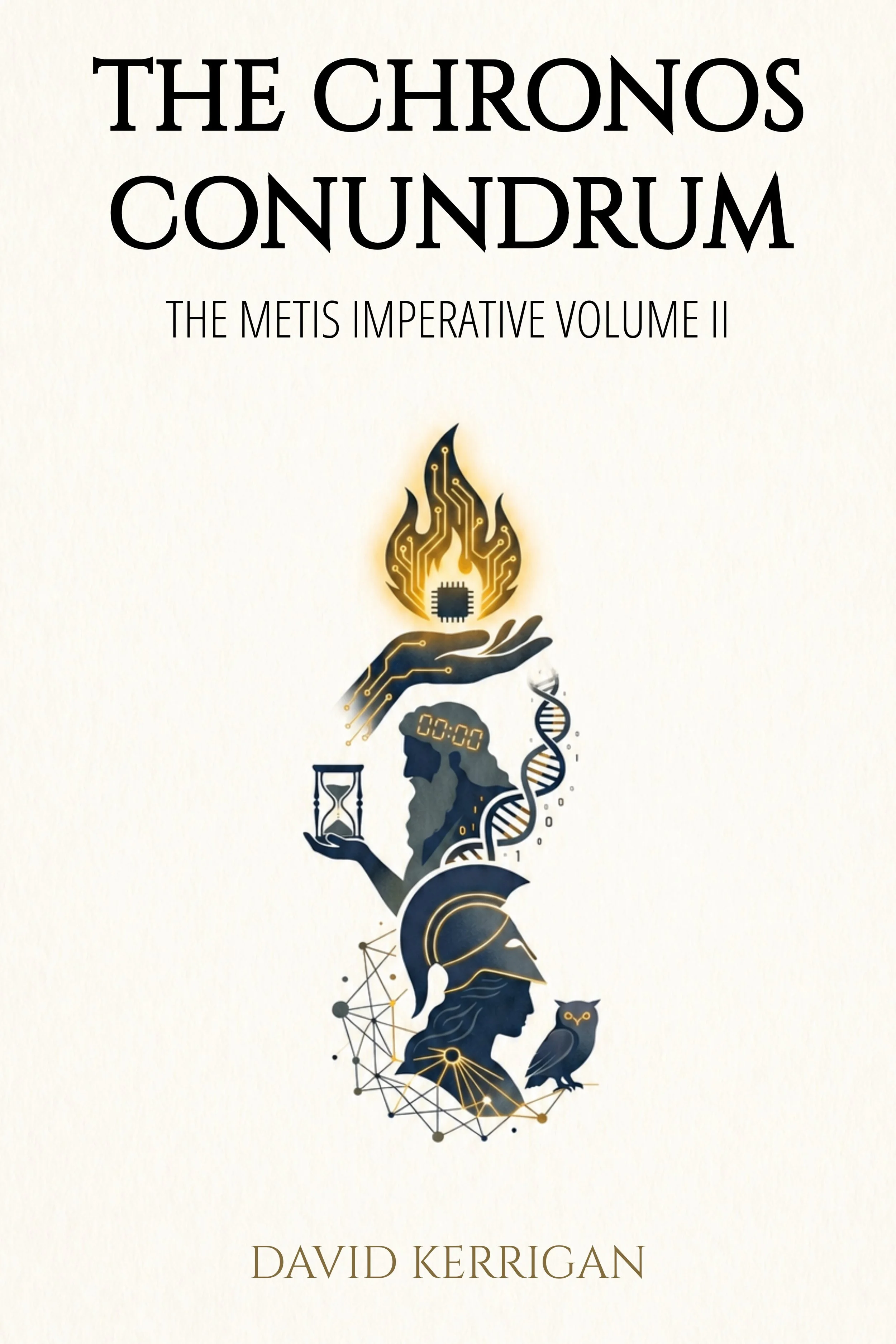
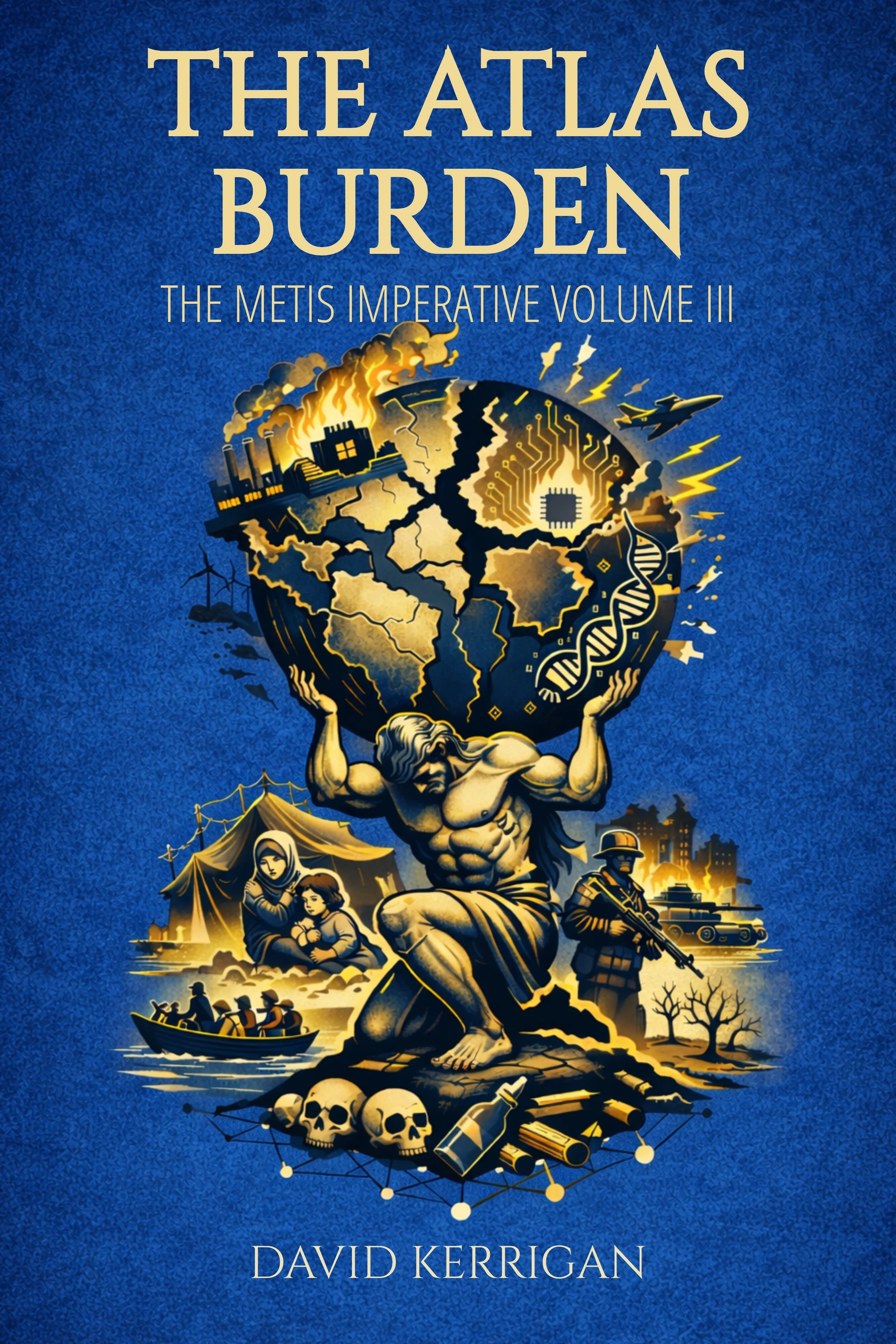
The Metis Imperative unfolds across three domains: Mind, Body and World. Each has its own standalone book, but combined, it seeks to challenge us to take a more active role in the uncomfortable questions of our future.
The first domain is Mind (The Opaque Machine)
In artificial intelligence, we are externalising cognition into systems we do not fully understand. These systems are not merely tools in the old sense. They are increasingly agentic, persuasive, adaptive and opaque. They operate through language, which makes them feel familiar, even when their internal logic is alien. They expose a dangerous interface between the machine’s opacity and the human operator’s fallibility. The risk is not only that AI may become powerful. The risk is that we will misunderstand what kind of power it is.
The second domain is Body. (The Chronos Conundrum)
In longevity science, biotechnology, diagnostics and synthetic biology, we are beginning to treat life as editable and time as negotiable. This may become one of the great humanitarian achievements of history. It may also create new hierarchies of access, age, power and legitimacy. If ageing becomes a variable, society must confront questions it has barely begun to ask: What is a normal lifespan? What happens to careers, inheritance, pensions, leadership and identity if time stretches? What happens if health becomes programmable before justice becomes scalable?
The third domain is World. (The Atlas Burden)
Every ambition must eventually touch the ground. AI needs energy. Biotech needs manufacturing. Robotics needs supply chains. Nations need sovereignty. Communities need continuity. Institutions need legitimacy. The world of atoms is not disappearing beneath the world of bits. It is becoming more important precisely because the digital layer now depends on it so completely. The future will be decided not only by model weights and genetic edits, but by grids, ports, mines, fabs, clinics, water, housing, logistics and trust.
Convergence changes the nature of risk. A failure in one domain can cascade into the others. AI accelerates biology. Biology reshapes demographics. Demographics strain states. States compete for minerals, chips and energy. Infrastructure limits AI. AI changes labour. Labour changes politics. Politics changes what science can build.
This is why incremental reform will not be enough.
We are not managing a collection of trends. We are entering a new civilizational phase.
What Metis Demands
Metis demands that we invert prestige. For too long, we have rewarded those who build technology more than those who solve problems. We celebrate the novel, while neglecting the builders, maintainers, operators, engineers, clinicians, carers, regulators, logisticians and civic stewards who keep the world coherent. The Promethean age will fail if the people who hold reality together are treated as secondary to the people who want to narrate it for their personal gain.
Metis demands that we design for continuity.
A civilization should not be judged only by its frontier. It is judged by its equality. It is not enough for some people to access extraordinary intelligence, personalised medicine and resilient infrastructure while others experience the future as delay, fragility and abandonment. If resilience becomes a luxury good, solidarity breaks. And when solidarity breaks, legitimacy follows.
Metis demands that we govern at the speed of consequence. This does not mean impulsive rule by emergency. Nor does it mean allowing every decision to sink into procedural mud. It means building institutions capable of learning, adapting and acting before shocks become irreversible. We need new sandboxes, new oversight models, new forms of public-private accountability, new technical standards, new democratic mechanisms and new ways to coordinate across borders without waiting for perfect consensus.
Metis demands that we preserve human agency.
The purpose of technology should not be to make humans obsolete, passive or manipulable. The purpose of technology worthy of civilization is to expand the range of meaningful human action. AI should not become an invisible priesthood of automated authority. Longevity should not become an escape route for the already powerful. Infrastructure should not become a fortress for those who can afford redundancy. The measure of the future is not capability alone. It is whether more people become capable of living with dignity, responsibility and agency.
Metis demands tragic realism.
This is not an easy conversation. We must abandon comforting, simplistic binaries. The future will not be saved by optimism alone, and it will not be understood through despair. Many of the technologies that threaten us may also be required to survive. Many of the institutions that protect us may also be too slow to act. Many of the companies building the future may be both indispensable and dangerous. Many of the fears that sound extreme today may become obvious tomorrow. Many of the solutions we need may currently be politically unthinkable.
The task is not to choose a utopian story. The task is to see clearly.
These Volumes Are Not A Handbook
The Metis Imperative is not a manual with ten steps to safety. It is not a prediction, a policy programme or a manifesto for one political tribe. It does not claim that any single author, regulator, founder, scientist or state can solve the alignment problem, the longevity transition or the infrastructure crisis.
Its purpose is more basic, and perhaps more urgent. It is to begin a change of our mental model. We need to stop reasoning about AI as if it were ordinary software. We need to stop reasoning about ageing as if it were an immutable background condition. We need to stop reasoning about the future as if it were made only of information. We need to stop treating governance as a brake and start treating it as an operating system.
Above all, we need to recover the idea that wisdom is not a decorative virtue. It is a survival technology. Metis is not the enemy of Prometheus. Metis is what Prometheus requires if the fire is not to consume the world.
The Way Ahead
The age we are entering will test every assumption we inherited from the last one. It will test whether democracies can act without becoming brittle. It will test whether markets can innovate without devouring the conditions of trust that make markets function. It will test whether science can expand the human horizon without turning access to time, intelligence and resilience into a caste system. It will test whether nations can protect sovereignty while cooperating on problems too large for sovereignty alone. It will test whether individuals can remain agents in a world increasingly mediated by systems that know how to persuade, predict and optimise them.
And it will test whether civilization can remember that the future is not something that happens to us.
The future is something we build, neglect, govern, squander or guide.
The first fire from Prometheus gave us power over the world. The second fire gives us power over mind, body and world together. That power is too great to be left to momentum. It is too dangerous to be surrendered to panic. It is too important to be governed by nostalgia.
We need a new seriousness. We need institutions with imagination. We need builders with humility. We need citizens who can think beyond spectacle. We need leaders who understand that speed without legitimacy becomes force, and legitimacy without capacity becomes theatre.
We need the courage to invent mechanisms that do not yet exist. We need the wisdom to know that not everything that can be built should be built in the same way, at the same speed, for the same incentives.
To explore the argument in greater depth, download the free sampler which features extracts from all three volumes. Then, I invite you to find the time to read any or all of the volumes of the Metis Imperative, with the aim of ensuring we choose the future we want.