The Preparation Paradox
Technology is evolving rapidly in plain sight. We have free access to amazing frontier AI models, the first treatments for monogenic diseases have been approved, half a million people a week pay for rides in self-driving cars and we’ve seen viral videos of dancing armies of humanoid robots. But for most people, AI remains brittle. Robots haven’t taken over jobs en masse and miracle cures remain elusive and/or expensive. Even if you sense disruption is coming, it’s easy to believe it’s tomorrow’s problem, not today’s.
This is the preparation paradox: the technologies are visible enough to warn us, but still immature enough to let us pretend preparation can wait. We mistake early brittleness for permanent limitation, and confuse the absence of mass disruption today with evidence that our institutions will be ready to cope tomorrow.
Outside the breathless hype of Silicon Valley, discussion is largely confined to vague ‘concerns’ about the possible impacts of AI on jobs. But the AI chatbots and agents of today are not the destination. They are the visible edge of something larger. They are harbingers of where AI is headed, but we judge them as if they are the finished threat. Preparing for a future extrapolated linearly from contemporary technology, governed with creaking 20th century institutions that lack the necessary speed, scale, jurisdiction, expertise, incentives and legitimacy, is like asking a cave-dweller to plan for a world of skyscrapers and airplanes.
“Timeo Danaos et dona ferentes” from Virgil's Aeneid warned Troy of the dangers of accepting apparent gifts. As powerful as AI will become, it is not a sole Trojan horse. A better metaphor is that of a matryoshka horse. Inside the Trojan horse of AI lie the warriors of genetics, robotics and quantum computing. Combined, they will overwhelm our defenses and our institutions if we naively and passively accept the ‘gift’.
“Timeo machinas et responsa ferentes”
(I fear the machines, even when they bring answers)
To understand our vulnerability, we need only look at our recent past. Barely 15 years ago as smartphones gained widespread acceptance, social media seemed like a harmless way to share photos and fragments of everyday life. Fast forward a decade and it has divided nations, normalized disinformation and destabilized society. But its power pales in comparison to what lies ahead. Our critical thinking, our institutions and our regulations have spectacularly failed to adapt thus far; but AI, robotics, genetics and quantum come with far more promise and far more peril.
Deployed with wisdom, these technologies can save lives on a scale akin to antibiotics or clean water. They can confine untreatable diseases to history, save humans from dangerous work and extend our species’ potential as much as electricity or computers.
Deployed without wisdom, these technologies could concentrate power, disenfranchise populations and fracture society.
Somehow, amidst the urgent and consuming concerns of the present, we must find time to define the future we’d like to see. The next few decades may compress, into a single lifetime, disruptions that once unfolded across distinct agricultural, industrial and digital eras.
Preparation does not mean trying to predict every breakthrough or ban every risk. It means building institutions capable of responding before disruption becomes crisis: faster public learning, stronger technical literacy, clearer accountability for autonomous systems, better mechanisms for democratic oversight, and serious investment in resilience. The task is not to reject the gift, but to stop treating gifts from powerful machines as neutral, inevitable, or free.
The Trojan horse of AI is semi-transparent. Unlike the Trojans, we know what is inside. It is rapidly approaching the walls of our society. Unlike the Trojans, we can plan for its arrival. But we must not mistake useful tools, charismatic founders, or benign intentions for preparation. Without the wisdom to prepare, we risk meeting the same fate as Troy: not destroyed by what we could not see, but by what we saw and failed to understand.
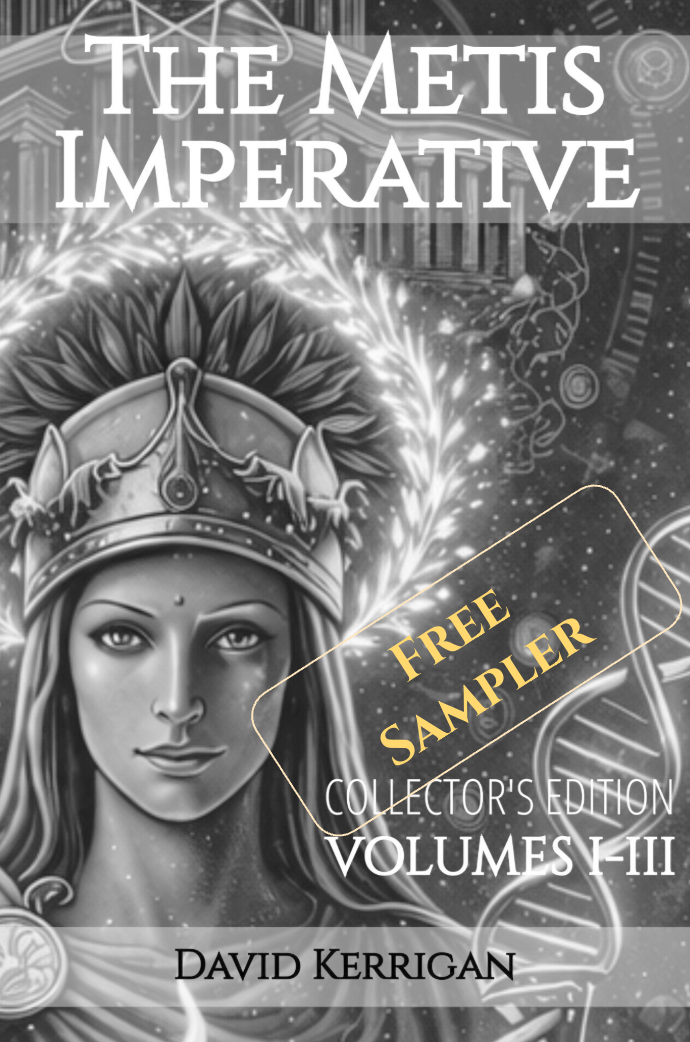
That is the purpose of The Metis Imperative: to ask what kind of wisdom, governance and institutional imagination this convergence demands.